
Reviewed and updated: October 25, 2026
Camera batteries are useful teaching tools only when adults control charging, storage, inspection, and disposal. The child’s job can be simple: stop using the camera and ask for help when anything looks wrong.
Identify the battery type
Read the camera label and manual to learn whether it uses alkaline cells, rechargeable AA batteries, a lithium-ion pack, or a sealed battery. These systems are not interchangeable. Make this part of a repeatable routine: check the starting condition, follow the relevant instructions, and record what changed. That keeps camera battery safety for kids: a parent checklist grounded in observable results instead of assumptions or a single unusually good or bad experience.
Keep charging adult-managed
Use the approved charger and cable on a hard, dry surface with ventilation. Adults should connect, monitor, and disconnect charging rather than leaving it overnight or under bedding. Verify the exact label, model, material, or setting before acting. Small differences in a package or environment can change the right method, so change one variable at a time and stop when condition, comfort, or safety gives a reason to stop.
Inspect before use
Do not use swollen, leaking, cracked, punctured, wet, unusually hot, or corroded batteries. A damaged pack should be isolated safely according to local guidance. A useful decision should still make sense on an ordinary day. Prepare the workspace, keep the process simple, and review the result before repeating it. Careful notes are more dependable than memory when products, conditions, or schedules change.
Prevent short circuits
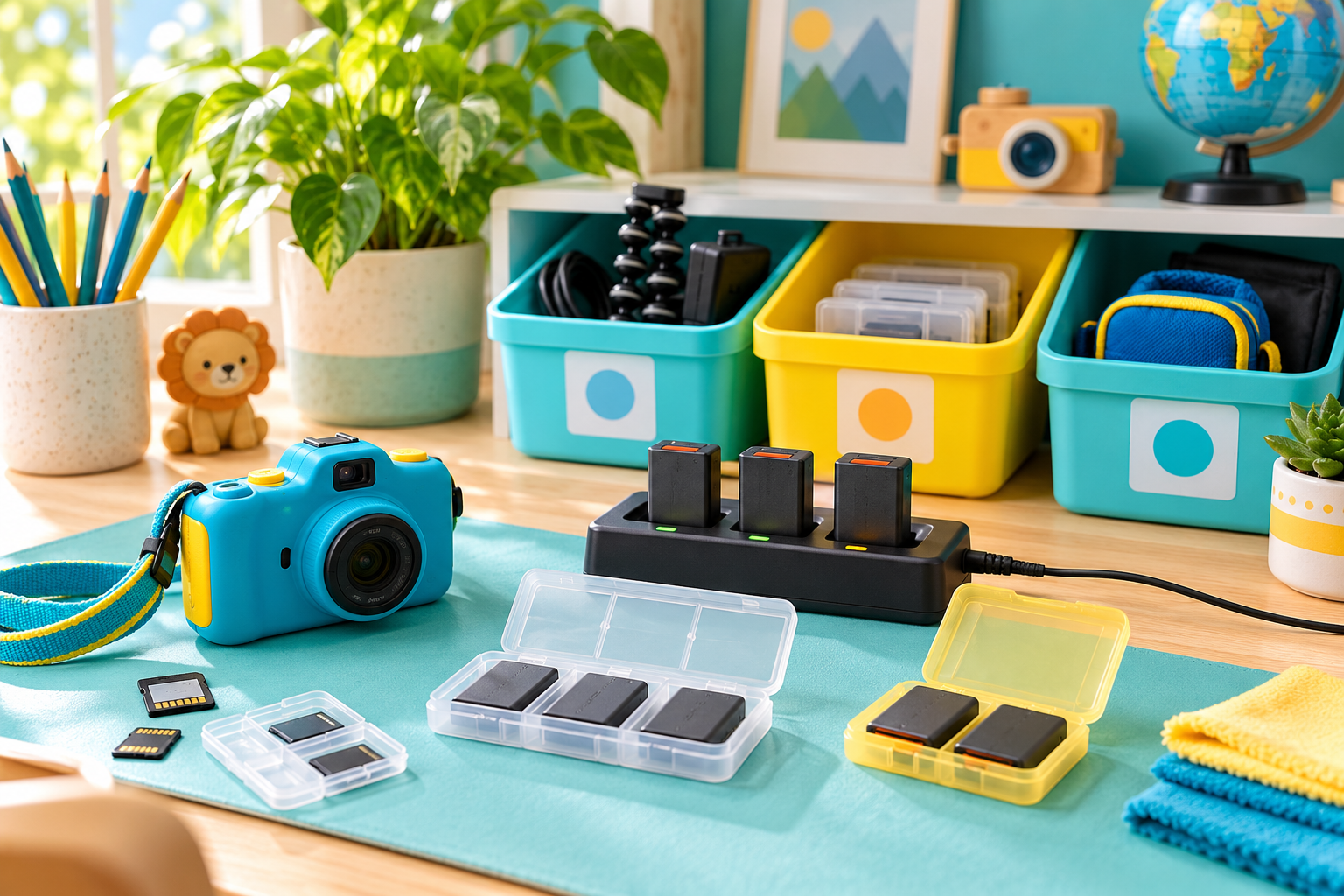
Keep loose batteries away from coins, keys, jewelry, and metal toys. Use terminal covers or separate cases for transport. Make this part of a repeatable routine: check the starting condition, follow the relevant instructions, and record what changed. That keeps camera battery safety for kids: a parent checklist grounded in observable results instead of assumptions or a single unusually good or bad experience.
Install with the camera off
Adults should match polarity and seat the battery without force. Never mix old and new cells or different chemistries in one device. Verify the exact label, model, material, or setting before acting. Small differences in a package or environment can change the right method, so change one variable at a time and stop when condition, comfort, or safety gives a reason to stop.
Teach a stop rule
If the camera becomes hot, smells odd, shows an error, or shuts down repeatedly, the child should place it on a safe surface and call an adult. A useful decision should still make sense on an ordinary day. Prepare the workspace, keep the process simple, and review the result before repeating it. Careful notes are more dependable than memory when products, conditions, or schedules change.
Store out of reach
Button cells and small batteries are swallowing hazards. Store all spares and chargers in a dry secured location away from young children and pets. Make this part of a repeatable routine: check the starting condition, follow the relevant instructions, and record what changed. That keeps camera battery safety for kids: a parent checklist grounded in observable results instead of assumptions or a single unusually good or bad experience.
Travel with care
Review current airline rules for spare lithium batteries and carry-on placement. Protect terminals and avoid packing damaged batteries. Verify the exact label, model, material, or setting before acting. Small differences in a package or environment can change the right method, so change one variable at a time and stop when condition, comfort, or safety gives a reason to stop.
Recycle correctly
Do not place rechargeable lithium packs in household trash. Use an approved battery collection location and follow local fire-safety guidance. A useful decision should still make sense on an ordinary day. Prepare the workspace, keep the process simple, and review the result before repeating it. Careful notes are more dependable than memory when products, conditions, or schedules change.
Put the guide into practice
Begin by writing down the result you want from camera battery safety for kids: a parent checklist. Include the starting condition, the people or equipment involved, and the limit that would make you stop. This short plan prevents an attractive feature, habit, or shortcut from replacing the real purpose. It also makes the final result easier to judge because the decision was defined before the work began.
Prepare the space and gather only what the first attempt requires. Use the checkpoints in Identify the battery type and Keep charging adult-managed before adding optional steps. Read current labels and instructions in full, keep packaging or model information nearby, and avoid mixing advice from products that merely look similar. When a condition changes, pause and verify rather than improvising.
During the process, make one deliberate change at a time. Note the setting, amount, timing, fit, or environmental condition that could affect the outcome. If the result is uncomfortable, confusing, damaged, or inconsistent, return to the last known safe point. More intensity, more product, or more repetition does not correct a poor match and can make the original problem harder to identify.
Use photographs, a short checklist, or a dated note when visual condition matters. The record does not need to be elaborate; it only needs to preserve the exact choice and its result. This is especially useful when several people share equipment, when packages look alike, or when weeks pass between uses. Remove old notes when they no longer describe the current item.
Finish with a brief review based on recycle correctly. Record what worked, what should change, and whether the same method still fits the next use. Store equipment and remaining products according to their instructions, clean the work area, and keep the notes with the relevant model or label. A dependable routine is simple enough to repeat and specific enough to catch a changed condition.
Quick checklist
- Identify the battery type
- Keep charging adult-managed
- Inspect before use
- Prevent short circuits
- Install with the camera off
- Teach a stop rule
Frequently asked questions
What should I verify first?
Start with the exact product, material, person, and setting involved. Read the current label or instructions and do not apply a rule from a similar-looking item without checking.
How can I compare results?
Keep the starting condition steady, change one variable, and record the result. Repeat only when the process remains safe and the comparison answers a useful question.
When should I stop?
Stop for damage, irritation, unusual heat, odor, poor fit, confusing instructions, or any condition that makes the next step uncertain. Replace, reassess, or seek qualified help as appropriate.