
Reviewed and updated: November 10, 2026
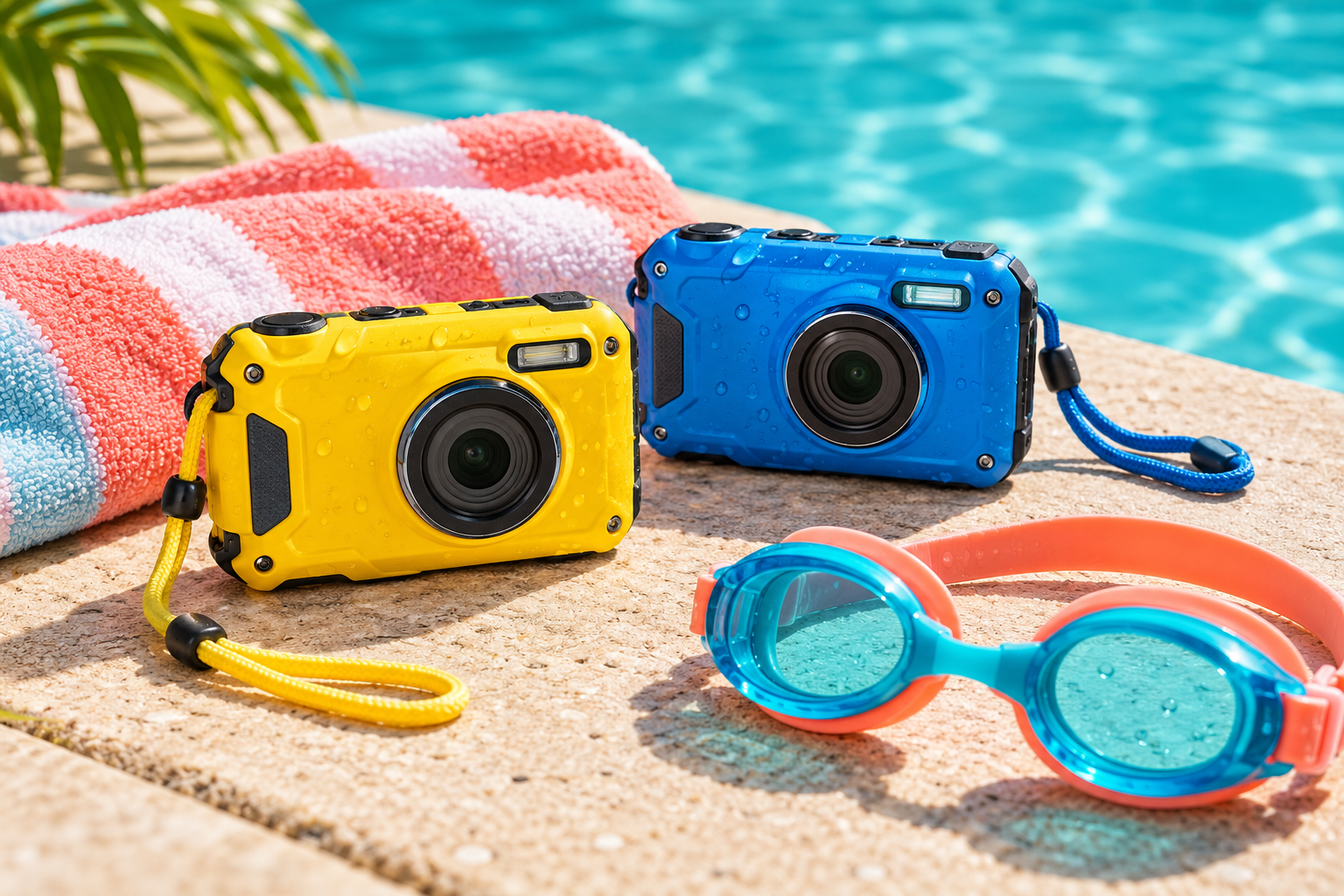
A family trip can offer plenty of small photo discoveries, but water-resistant equipment still needs grown-up care. We would consider KODAK PIXPRO WPZ2 for straightforward supervised snapshots and compare OM SYSTEM Tough TG-7 when close-up and other advanced features have a real job. Start with your planned activity, your child’s handling and the exact care requirements. Waterproof wording is a set of conditions to follow, rather than permission for rougher play or less supervision.
Plan the outing before the camera
Picture where you will use the camera before comparing specifications. Poolside splashes, a beach visit and a boat trip place different demands on equipment and supervision. Note the expected conditions, including salt or fresh water, temperature and impact risks. A depth number does not make a camera suitable for every dive, hot spring or fast-moving sport. It is fine to begin with dry-land pictures of the outing while you learn the kit together.
Two rugged-camera approaches to compare
WPZ2 offers a stated 15-metre waterproof specification, 2-metre shock resistance, 4× optical zoom and 1080p video under its manufacturer’s conditions. TG-7 gives you a more advanced rugged-camera option to compare. Look at the exact model, regional package and full manual rather than treating a depth or drop number as a guarantee. The most useful extra features are the ones that support a safe project your child actually wants to photograph.
The door and seal check belongs to a grown-up
The WPZ2 support guidance emphasizes a clean, undamaged gasket and tightly closed battery compartment. Sand, hair, or lint can break the seal. Make the door check an adult task before every water session and never open the compartment underwater or while the camera is wet.
Make the controls comfortable on dry land
Practise on dry land first. Can your child hold the camera comfortably, see the screen, find the shutter and recognise the battery display? Simple automatic operation and reachable controls leave more attention for a family face or an interesting pattern. Show where fingers need to stay clear of the lens, flash, seal and latch. An adult manages the door and the care checks, with the strap used only as instructed and without snag risks.
Plan storage and power
Confirm the included battery, charging method, memory-card type, and whether spares are approved. Charge away from water and carry the camera in a padded dry place. Never assume a generic USB cable, battery, or card is safe because it physically fits.
Rinse and dry after water
Follow the manual after salt, sand, chlorine, or mud. The WPZ2 guidance calls for clean-water rinsing with the battery compartment closed, followed by thorough drying. Do not use high heat, compressed air, or an open door to speed the process.
Set family privacy rules
Water activities can include swimsuits, changing areas, strangers, and location clues. Decide when photography is appropriate and ask permission before sharing. A camera that is not connected to a phone still creates files that can be copied or posted later.
Our recommendation
WPZ2 is worth considering when its limits, controls and 4× zoom fit a straightforward family snapshot plan. TG-7 is more appealing when you have a specific use for its extra rugged-camera features and are ready for the greater commitment. Use the exact model’s specifications and instructions to plan the accessories and care it needs. A well-matched camera should help your child enjoy noticing the day, while you keep the care routine under control.
Make a dry-bag packing card
Make a packing card for the adult in charge. Put the exact camera model and the manual’s seal-care page on one side, and the place for the dry towel, case and spare card on the other. Battery and card doors should open only in the dry location specified by the maker. Your child can help plan the next photograph while you finish the checks, without turning a hurried pack-up into a guess about the right procedure.
Common questions
Can a waterproof camera be opened underwater?
No. Keep the door sealed and follow the exact manual before opening after use.
Is waterproof the same as splashproof?
No. Verify the stated depth, duration, temperature, and maintenance limits.
Should a child use a wrist strap?
Use the supplied strap as directed, with adult supervision and without creating an entanglement hazard.
Manufacturer references
Find the camera on Amazon
For straightforward supervised family snapshots. Follow this exact model’s seal-care and water-use instructions.
KODAK PIXPRO WPZ2 is relevant for a family wanting straightforward automatic photographs in a rugged compact body.
Search Amazon for KODAK PIXPRO WPZ2 (paid link)For a growing outdoor photo interest with a use for its specialist features. Plan adult care alongside the camera.
TG-7 is worth comparing when your family has a real use for specialist close-up and rugged-camera features.
Search Amazon for OM System Tough TG-7 (paid link)Give the first outing a simple picture theme that works from a safe position: patterns, bright colours or a few details from the trip. There is no need to put the camera into water to make the gift feel worthwhile. Your child can show you what caught their attention while you learn how the equipment fits into the family’s ordinary routine.
After the manufacturer’s cleaning and drying steps are complete, copy and back up the photographs before clearing the card. Ask your child to pick a small set for a private album, checking the whole frame for people and location details before sharing. A dry-land picture of a favourite moment can tell the story just as well as a more ambitious shot that would need an unsafe viewpoint.
The right camera is one your child can use comfortably within a routine you can maintain. Keep the first session calm, stay with familiar safe activities and stop when conditions change. Then enjoy the pictures together. The adventure belongs in what your young photographer notices, not in testing the camera’s limits or stretching the rules around water.
Picture the camera after the outing
Before you buy, imagine bringing the camera home sandy or wet. Which adult will follow the model’s cleaning, drying and door-opening instructions, and where will it be stored afterwards? That care belongs in the decision alongside the photographs. A simpler camera you can look after correctly is more useful than extra features on equipment that becomes a chore. Keep water photography secondary to supervising the children and the activity itself.
For the first dry-land practice, ask your child to find a texture, a wide view and one small detail. Learn the grip and shutter before introducing water or a busy setting. You can enjoy a rugged camera’s ordinary pictures while you learn its specific limits; there is no need to test a depth rating to make the purchase feel worthwhile.