
Reviewed and updated: November 1, 2026
Instant cameras can turn photography into a hands-on family activity, but “small” is not automatically better for a child. Compact cameras are easier to pack, while a larger body may provide a steadier grip and clearer controls. The print size, film cartridge, flash behavior, and ongoing film cost matter just as much as the camera body. This guide compares format choices so families can match the tool to the child and the project.
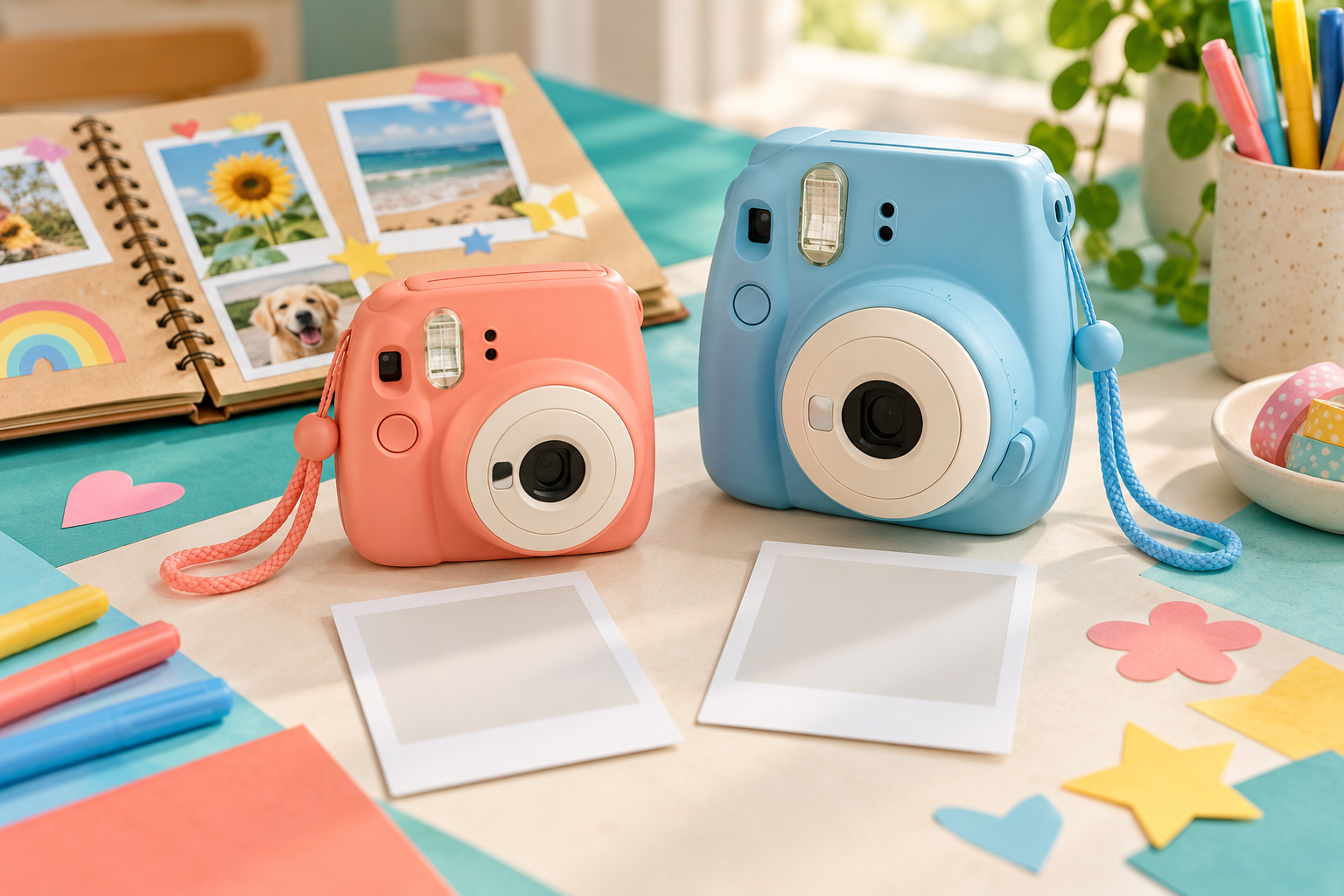
A simple instant camera that uses Instax Mini film. Compare grip size, film loading, flash behavior and the ongoing cost of the matching film.
View current Amazon search results for Fujifilm Instax Mini 12 Instant Camera (paid link)
A smaller instant camera using Polaroid Go film. Compare its controls, body size and print format with the child’s hands and planned projects.
View current Amazon search results for Polaroid Go Generation 2 Instant Camera (paid link)
Start with hands and grip
Have the child hold a similarly sized household object with both hands. Can the index finger reach a pretend shutter button without twisting the wrist? Can the other hand support the body without covering the lens, flash, or print slot? A very small camera can be slippery, especially when the child is excited or wearing gloves. A larger body may be easier to brace against the torso.
A wrist strap helps only when it is attached correctly and used. Teach the child to put the strap on before the camera leaves the table. The camera should never swing by the strap or hang from a backpack zipper. If siblings will share it, choose a setup that adjusts quickly without removing small parts.
Compact format advantages
A pocket-size instant camera takes less room in a day bag and can feel less intimidating. The matching prints are usually smaller, which is convenient for journals, place cards, and mini albums. Small cartridges can also make the entire kit lighter. The tradeoff is that tiny controls and a narrow grip may be harder for younger hands.
The Polaroid Go Generation 2 is an example of a deliberately compact instant format. Its body and matching Go film should be treated as one system. Before buying, confirm the exact camera generation, included strap, battery and charging requirements, and film type. Similar Polaroid names do not mean the film is interchangeable.
Full-size mini-film cameras
“Mini” film can still come from a body that is wider and taller than a truly pocketable camera. That extra surface can provide a more obvious grip, larger lens barrel, and simple physical controls. The print has a familiar card-like shape with a white border, useful for captions and albums. The camera still needs a protected place in the bag because the lens, flash, and film door should not carry pressure.
The Fujifilm Instax Mini 12 uses Instax Mini film and a twist lens operation. Confirm the exact film logo and cartridge before opening anything. Families should also review the close-up mode, flash behavior, and the distance guidance in the manual. An instant camera is not a digital camera with unlimited retries; each exposure uses one sheet.
Compare the print before the body
Buy or view a sample print from each format if possible. Ask whether the child wants to write captions, trade pictures, build a scrapbook, or display a small sequence. A tiny print can be charming in a journal but may feel cramped for group portraits. A larger print is easier to label but consumes more album space.
Film availability affects whether the camera remains useful. Write the full film name in the family photo box and keep different cartridges separated. Do not force a cartridge that does not slide into place as described in the manual. Keep unopened film cool and dry according to its packaging, and do not leave it in a hot car.
Think about the project and pace
Instant photography works best with a simple limit. Give the child three or four planned frames for a walk rather than an entire cartridge without a goal. Pause before each photo: check the subject, background, distance, fingers, and light. That small ritual improves results and makes the cost of film easier to manage.
Our one-window indoor photography project is a good practice exercise with a digital camera before using instant film. The fall-color photo walk also shows how a theme can keep a child focused without turning the outing into a technical lesson.
Flash and close-up expectations
Many simple instant cameras use automatic flash in situations where a phone might not. Teach children not to cover the flash and not to fire it close to another person’s eyes. Indoors, reflective windows and mirrors can create bright spots. Outdoors, strong backlight can make faces difficult. The manual’s distance guidance is more useful than guessing.
Close-up or selfie modes change the useful focusing distance, but they do not make every arm-length picture sharp. Practice the mode with an adult supervising the first cartridge. Keep the print slot clear and let each print eject completely. Never pull a developing print from the camera or bend it to “help” the image appear.
Product search and model matching
The product cards in this guide use precise Amazon searches for the Fujifilm Instax Mini 12 Instant Camera and the Polaroid Go Generation 2 Instant Camera. Each search may show kits, cases, film bundles, older generations, or similarly named accessories. Match the complete camera name, generation, included items, and film system before ordering. A colorful case in the first image is not proof that the camera itself is included.
Avoid bundles that obscure the actual film count or substitute third-party accessories without clear specifications. Prices and availability change, so this guide does not quote them. Decide first which format suits the child, then compare a camera-only package with any bundle on an item-by-item basis.
Adult setup makes the first day better
An adult should load the first film cartridge, insert or charge the battery as required, set the strap, and explain the print slot. Keep the dark protective sheet and first ejection away from faces. Demonstrate where fingers belong. Establish a rule that the camera returns to its case before anyone handles the developing print.
Label the case with the film format, not just the child’s name. Store the manual or a photo of the key instruction pages in the family photo folder. If the camera will sit unused, follow its storage directions and check the battery before the next trip.
Choosing between the two formats
Choose the compact format when bag space, light weight, and small scrapbook prints are the priority and the child can handle the smaller controls. Choose the larger Mini-style body when grip, control visibility, and a somewhat larger writing area on the print matter more. Neither format is universally better.
The best first instant camera is the one a child can hold securely, operate with supervision, and use within a clear film budget. Match the print system first, rehearse the handling, and plan a small project. That turns the camera from a novelty into a tool for noticing and remembering.