
Reviewed and updated: November 10, 2026
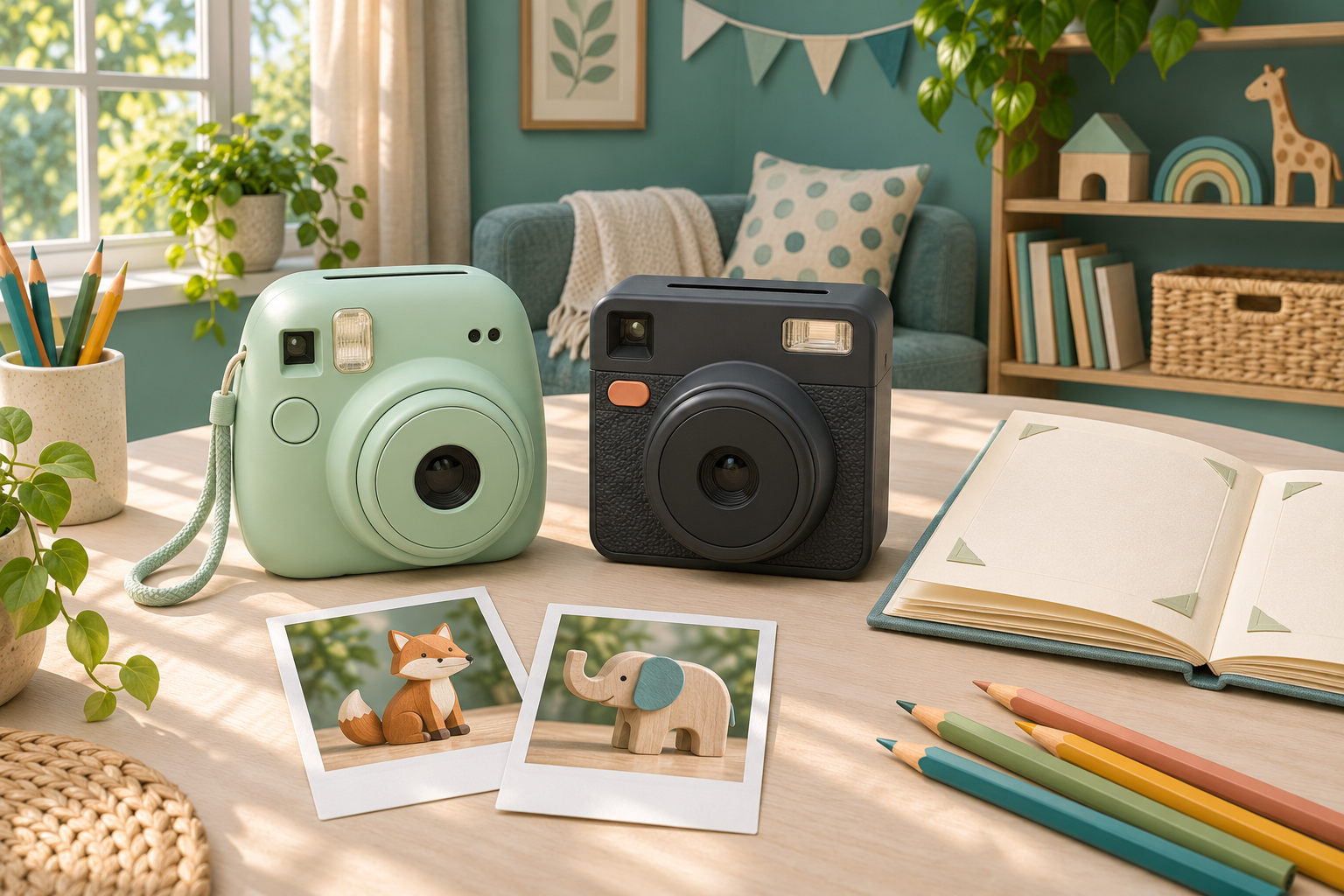
A photo of the birthday cake, a serious portrait of a teddy bear, a tiny picture for Grandma: an instant camera gives your child something to hold after the shutter clicks. We recommend the Fujifilm instax mini 12 for its lighter body and playful pastel look. The mini 41 suits a child who loves a textured, retro-style camera. Their main shooting features are very similar, so this is mostly a decision about handling and personality, with the same small film format to enjoy.
The fun starts with a real little print
Both cameras turn each shot into a film print. There is no screen for checking a picture before it uses film, which makes a little planning part of the experience. If your child enjoys deciding that a moment deserves a keepsake, that can be lovely. If they want to take dozens of practice pictures and keep only a few, a digital camera is a better starting point. Work out which kind of photography will make them want another turn.
Its unloaded weight is 306 g.
Fujifilm instax mini 12 Instant Camera
A lighter, rounded pastel camera for small keepsakes, with automatic exposure and close-up parallax correction.
Find in Amazon (paid link)
Fujifilm instax mini 41 Instant Camera
A dark, textured camera for a child who loves the retro look, using the same mini film and main shooting features as the mini 12.
Find in Amazon (paid link)
What will go on the first scrapbook page?
Imagine your child’s first photo collection: a favourite toy beside a family portrait and a picture from the garden. Each print has a place in a birthday guest book or scrapbook, rather than disappearing into a camera roll. The pleasure is making a few pictures your child wants to keep.
If your child would prefer to inspect each photograph first, a digital or hybrid instant camera offers a different experience. Another option is to take digital pictures and print a small selection together. Our SELPHY printer comparison explores that route for family projects. Thinking about the finished pictures before the camera colour helps you buy the kind of fun your child is actually expecting.
The same little film format
Fujifilm specifies the same instax mini film format and 62 × 46 mm picture area for both. Each has automatic exposure, a 60 mm f/12.7 lens and a close-up mode for subjects 0.3–0.5 m away. Both include close-up parallax correction, which adjusts viewfinder framing for nearby subjects. Those similarities are good reasons to resist reading “41” as a promise of more advanced results than “12.”
Either camera gives you the same small print format without a digital preview. The mini 41’s larger number does not make its pictures larger. Appearance deserves a place in the decision if it makes your child eager to pick the camera up; keep that preference separate from a promise of better photographs.
Mini 12 brings a lighter, pastel personality
The mini 12 looks ready for a playful photo outing, with a rounded shape and pastel colours. Its 306 g weight excludes film, batteries and strap, so the ready-to-use camera will weigh more. That makes the figure a useful comparison point, rather than a promise of comfort in every small hand. Look at whether your child can reach the shutter without changing grip or covering the lens. Their hands matter more than a product picture.
If possible, let your child handle the camera before buying. Ask them to hold it with two hands, look through the viewfinder and find the shutter. You could pretend the shop display is a teddy-bear portrait studio, without taking a shot. Watch whether the camera stays steady as they press. A camera that feels comfortable makes it easier to concentrate on a face or a funny toy pose when the real photographs begin.
Mini 41 has a grown-up camera look
The mini 41 has a different personality: a dark, textured body, metallic-like finish and orange accents. Fujifilm describes the texture as helping grip. Its unloaded weight is 345 g, or 39 g more than the mini 12 on those manufacturer figures. The texture is worth feeling in person if you can, but it cannot guarantee a secure hold. Your child still needs a comfortable two-handed grip and clear access to the controls.
We would favour the mini 41 when your child loves the traditional camera look. If the offers cost different amounts, decide how much that preference matters to your family. You are still buying the same film size without a preview screen. The darker finish changes the style of the gift, not how the pictures are made.
A quick flash check before the first portrait
Both specifications describe a flash that fires for every shot with automatic light adjustment. Their stated effective flash range is 0.3–2.2 m. That gives a family a useful planning limit: a nearby portrait is a more suitable starting activity than expecting the flash to light a distant stage. Neither model offers the flash-off choice some buyers may assume is standard.
If you need a flash-off setting, look at a different camera. For ordinary home pictures, a nearby portrait is a more suitable beginning than a distant stage or a whole room. Let your child give a willing toy its first photo session, check the edges of the viewfinder and pause before pressing the shutter. Keep flash use comfortable for anyone being photographed and follow the camera’s instructions. A small plan makes each film frame feel purposeful.
Save room in the gift plan for film
Both models use instax mini film, sold separately in Fujifilm’s specifications. Check the actual package rather than assuming every camera offer includes it. We would make the film plan part of the present: enough for a first activity, with a clear agreement about how many pictures to take. Your child can help decide which moments deserve a print. Planning the next refill matters more than a bundle full of accessories they may never use.
For the first page, try three different subjects: a toy, a willing family member and a tiny detail from home. That makes a more interesting collection than repeating one portrait until it feels perfect. Our photo scavenger hunt has ideas you can narrow to a few film-friendly prompts. Let your child name the page and enjoy the small finished project before adding more equipment or a longer assignment.
Get ready for the first teddy-bear portrait
Each camera requires two AA alkaline LR6 batteries. An adult should manage battery and film setup according to the exact model’s instructions. Confirm the camera name, colour, film and included accessories in the offer you are considering. A big bundle photograph can make a gift look ready for anything, but the useful extras are the ones your family will use. Start with a working camera, the right supplies and somewhere to keep those first prints.
A simple album page is enough for the first afternoon. Show your child how to switch on, frame the picture and take a shot, then make time to enjoy the result together. The teddy bear does not need a professional portrait session, and a slightly wonky picture can still belong in the collection. Give the camera a safe storage place so it is ready when the next small photo idea comes along.
The buying decision
The mini 12 is our recommendation for its lighter pastel design when that feels right in your child’s hands. The mini 41 earns its place when its dark, textured retro styling is the look they love. The shared film format and shooting features make those preferences more useful than the model numbers. For lots of practice pictures and a screen to review them, we would buy a digital camera instead.
For a child excited by paper keepsakes, either can become the beginning of a small photo collection. Match the handling and style to your child, plan for film, and give the first pictures somewhere to live. The best part of the gift may be seeing which ordinary things they decide are worth remembering.