
Reviewed and updated: October 21, 2026
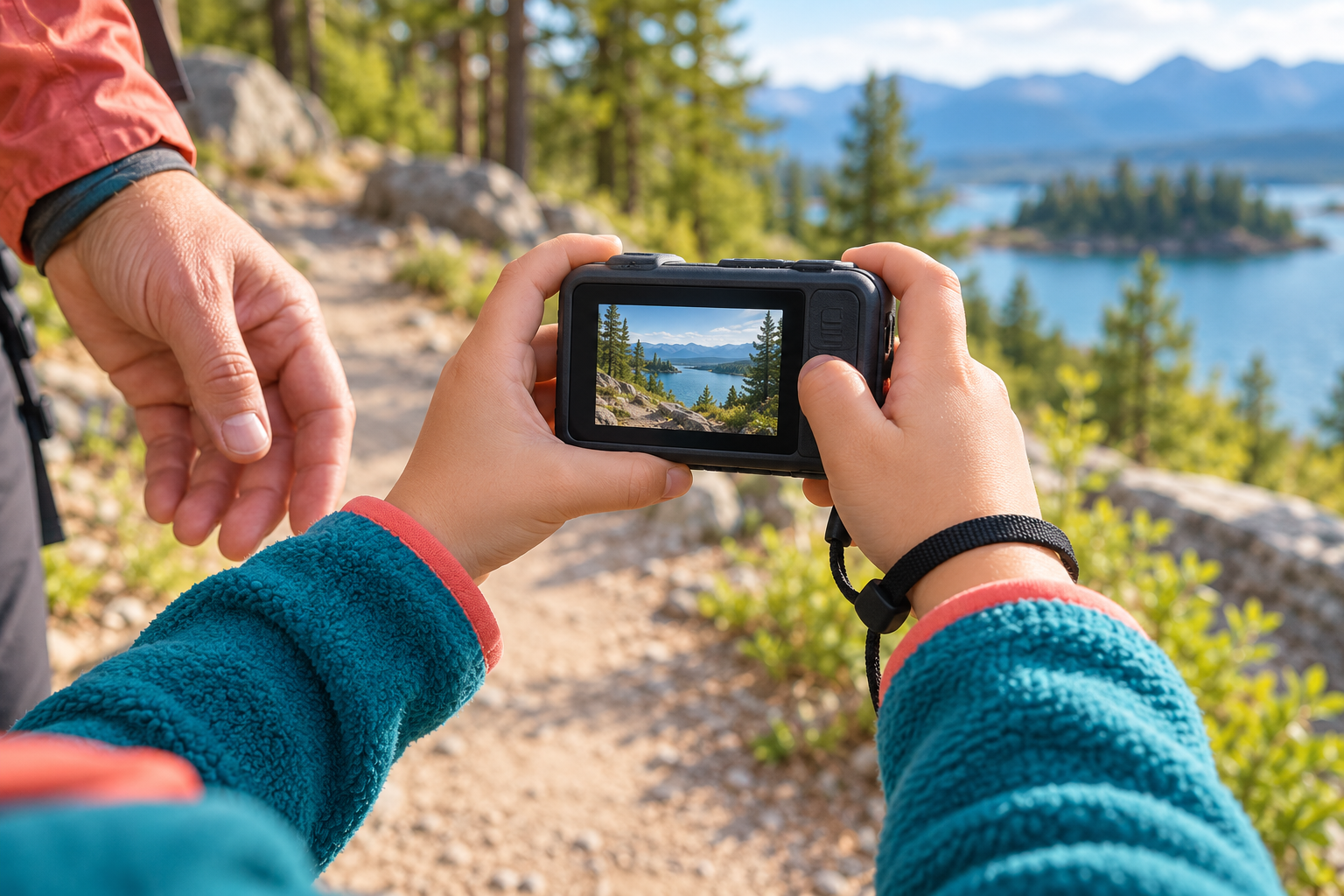
An action camera for a child is a family tool, not a toy that removes supervision. Controls, mount safety, waterproof limits, battery design, and a simple transfer routine matter more than extreme resolution.
This guide was reviewed against current official product information where a model is discussed. Specifications and packages can change, so verify the exact label or manufacturer page before acting.
Start with the activity and the child
A camera for a calm nature walk has different needs from one used on a bike, at a pool, or on a family trip. Consider age, grip, reading level, patience, and whether an adult will control settings. No camera makes an unsafe activity safe, and a child should never frame a shot while moving through traffic or difficult terrain.
Compare simple current GoPro options
GoPro currently positions HERO and LIT HERO as compact, simple cameras, and its kids-and-pets page includes a LIT HERO kids bundle. HERO uses a built-in battery, while larger models have different batteries and controls. Check the current official comparison because bundle contents, mounts, and app features can change.
Decide whether advanced controls help
HERO13 Black offers more settings, accessories, and removable-battery flexibility, but that can add cost and complexity. A beginner may capture more usable family clips with a simpler one-button routine. Buy the model the child can practice with, while an adult handles firmware, accounts, cloud settings, and privacy decisions.
Treat waterproof claims precisely
Waterproof depth applies only when doors, seals, and accessories are correctly fitted and undamaged. Salt, sand, chlorine, and impact add care requirements. Rinse and dry the camera exactly as directed. Never let a child dive, swim farther, or enter moving water because the camera is marketed for adventure.
Choose mounts that fail safely
Use only compatible mounts and follow age, helmet, sport, and location rules. Avoid neck cords, improvised straps, or mounts that can snag. A short wrist strap may help during a stationary activity, but it must fit correctly. Adults should install adhesive, helmet, bike, and chest mounts and check them before every use.
Plan batteries and memory
Confirm whether the battery is built in or replaceable, how charging works, and what memory card specification the camera requires. Carry charging gear in a dry adult-controlled bag. Format and test the card before the outing, then transfer files after. Heat, cold, and high-resolution video can reduce practical runtime.
Protect privacy during transfer
Review clips before sharing. Remove footage with addresses, school names, license plates, other children, or location clues. Keep account credentials with an adult and disable automatic public posting. A family backup folder with the date and event is easier to manage than leaving every clip only on the camera or phone.
Choose the least complicated fit
Choose GoPro HERO for a tiny simple 4K option, LIT HERO when the current built-in light and bundle fit the activity, or HERO13 Black when the family will actually use its extra controls and accessories. Verify the official model and package, then compare the same item in paid Amazon results. Availability remains unverified while Amazon API eligibility is blocked.
Quick checklist
- Match the camera to the activity.
- Keep adult supervision in control.
- Verify waterproof and mount limits.
- Test battery and memory before leaving.
- Review privacy before sharing.
- Buy the simplest model that fits.
Why these checkpoints matter
- Match the camera to the activity. This defines the starting condition and prevents the rest of the process from resting on an assumption.
- Keep adult supervision in control. This narrows the choice to evidence you can verify on the exact label, model, or scene.
- Verify waterproof and mount limits. This checkpoint reduces avoidable risk before another variable is introduced.
- Test battery and memory before leaving. This keeps the routine compatible with the person, product, material, or equipment involved.
- Review privacy before sharing. This creates a repeatable step instead of relying on memory or marketing language.
- Buy the simplest model that fits. This final review catches changes in condition, availability, or instructions before the next use.
Common questions
Is an action camera a good first camera?
It can be when controls are simple and the family wants hands-free or outdoor video, but still photography and close framing may be easier on another camera.
Can a child use a helmet mount?
Only when the sport, helmet maker, mount maker, and supervising adult permit it. Mounting must not compromise the helmet.
Does waterproof mean maintenance-free?
No. Seals, doors, rinsing, drying, and depth limits still require careful adult checks.
Official product references
- GoPro cameras
- GoPro HERO
- GoPro LIT HERO
Compare current Amazon listings
Check the exact model, package, seller, current price, and availability.
View current options on Amazon (paid link)(paid link)
Check the exact model, package, seller, current price, and availability.
View current options on Amazon (paid link)(paid link)
Check the exact model, package, seller, current price, and availability.
View current options on Amazon (paid link)(paid link)
Keep the decision useful
Write down the exact model, label, starting condition, and result. Change one variable at a time and return to the official instructions when anything is unclear. A short record makes the next decision easier and keeps an isolated result from becoming a rule that does not fit a different product, person, material, or environment.
Review the information again before repeating the process. Stop when comfort, safety, condition, or the manufacturer’s instructions provide a reason to stop. A useful routine stays simple because every step answers a real question.
For the next attempt, note what improved, what remained uncertain, and what should stay unchanged. This final check reduces guesswork and helps small problems become visible before they turn into repeated mistakes.
Keep the original instructions, model information, and observations together. Before repeating the process, confirm that the product, setting, environment, and intended result are still the same.
Use the result as one observation rather than a promise. Conditions change, and the safest next step is the one supported by the current label, manual, evidence, and the limits you can verify.
Use the result as one observation rather than a promise. Conditions change, and the safest next step is the one supported by the current label, manual, evidence, and the limits you can verify.
Use the result as one observation rather than a promise. Conditions change, and the safest next step is the one supported by the current label, manual, evidence, and the limits you can verify.