

5 Photography Projects for Kids That Build Real Skills
A spoon can look enormous, a teddy bear can go exploring and a familiar room can hide a whole alphabet of shapes. These five photo projects give your child a small adventure to finish and something to show you afterwards. Use a suitable compact camera, instant camera or phone you supervise, then pick the idea that makes them curious. One enjoyable project is enough for today; the rest can wait for another turn with the camera.
1. A color-and-shape scavenger hunt
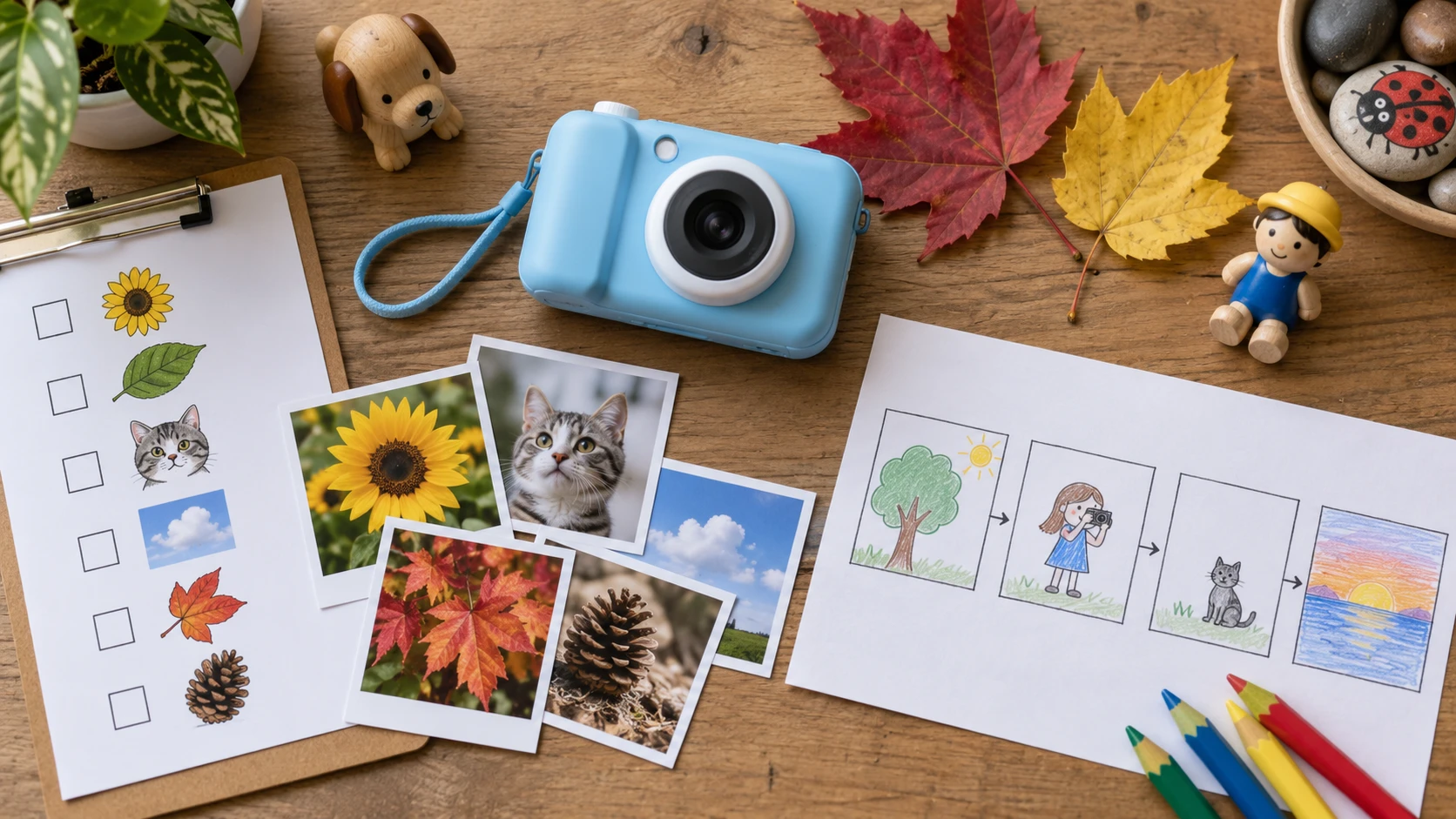
Make a handful of clues such as a circle, a triangle, something red, a reflection, a rough texture and a repeating pattern. Let your child’s answers surprise you. An older photographer could keep the hunt in one room or use only safe low viewpoints. The challenge is noticing something, not racing to tick every box. If a clue would mean crossing a boundary or photographing private information, find a different answer.
2. One object, five viewpoints
Give a familiar toy, plant or piece of fruit five portraits: a wide view, eye level, a safe view from above, a close detail and a view through something such as a doorway. Keep every position reachable without climbing and help with camera placement. Put the pictures beside one another. Your child can explain which makes the object seem grand, tiny or mysterious, even though the subject never changed.
3. A three-frame beginning, middle, and end
Plan a three-picture story before pressing the shutter. A stuffed animal can leave home, discover a surprise and return, or a block tower can grow through three stages. Your child decides which moment introduces the story, which changes it and which ends it. An adult manages any food, tools, pets or movement involved. Keeping the plot small makes it easier to finish and gives each photograph a reason to be there.
4. A portrait with permission
Invite a willing family member to sit near a window or in open shade. Your child asks permission, picks a suitable background and tries a serious expression, a smile and a relaxed moment. Look at where the light falls and what appears behind the face. The person can decline or stop at any time. A good portrait project includes kindness and comfort as well as a picture your child is proud to keep.
5. A texture alphabet or number hunt
Hunt for letters and numbers suggested by ordinary shapes. A chair leg may look like an A and a curled hose like a six, viewed from a safe position. This can grow slowly into a poster or a private album. Do not move equipment or climb to complete the set. Missing a letter is a reason for another day’s discovery, rather than a problem your child has to solve by taking a risk.
Plan, photograph, and edit
Agree on a small finished selection before each project. Afterwards, save the originals, look at the pictures together and use copies for any modest crops or light changes. Ask what the photograph is about and which version makes that idea clear. Your child’s choices should still be recognisable after editing. A funny angle or an imperfect frame may be exactly what makes the toy’s adventure worth telling.
Help each project reach a real ending
Before starting, agree on a small finished result: three story frames, five color discoveries or one portrait your child wants to keep. That makes the activity manageable and gives you a stopping point beyond running out of battery. A younger child may finish with a single picture and a spoken title. An older child may enjoy arranging a short sequence, but more frames are useful only when they add something to the idea.
Offer one suggestion after looking at the first attempt. If the subject is unclear, ask what the viewer should notice. If the background is distracting, move a safe object or try another reachable position. Make a comparison picture and let your child tell you what changed. Do not turn every project into the same lesson about technical perfection; a playful idea can survive a tilted frame or an unusual crop.
Make room for different ways of taking part. Your child can direct the camera position, arrange safe objects or dictate a caption while you handle equipment that is difficult for them to hold. A seated tabletop version can preserve the whole creative challenge. The important ownership is in the decisions, not in completing every physical task without help.
Bring a favorite idea back with one new twist
Once a project feels familiar, change one constraint. The color hunt might become three shades of blue; the toy story might happen entirely in one corner; the portrait might use a different quiet background. Keep the change small enough that your child can compare it with what they already made. Repetition becomes interesting when it answers a new question rather than simply asking for more pictures.
Use copies for any edits and keep the original files backed up. Your child can choose the opening image for a private slideshow or help design an album page. Check the pictures and captions for permission and identifying details before sharing. A small family audience is enough to give the project a sense of occasion without turning it into an online performance.
Let your child explain what they would try next time. You may hear a technical question, a new story or a wish to photograph the same spoon again. Follow that clue. The projects are starting points for looking and storytelling, and a new camera is rarely the first thing needed to keep the discoveries coming.
Write down the title exactly as your child gives it. Their words can reveal the joke, mystery or discovery behind a picture you might otherwise misunderstand. That is a fitting finish for a project built around their way of seeing.
Turn five pictures into a miniature exhibit
Make a miniature exhibition from five pictures with one narrow theme, such as circles at breakfast. Print them or use a private album, with an adult checking images and sharing settings. Let your child choose the opening frame, arrange the rest and invent a title. Ask a family viewer to guess the theme before hearing the name. The little showing gives the project an ending—and often a new idea for what to photograph next.
Adults should adapt activities to the child’s age, device, and supervision needs.