

Instax Mini Film Price: How to Compare Cost Per Photo
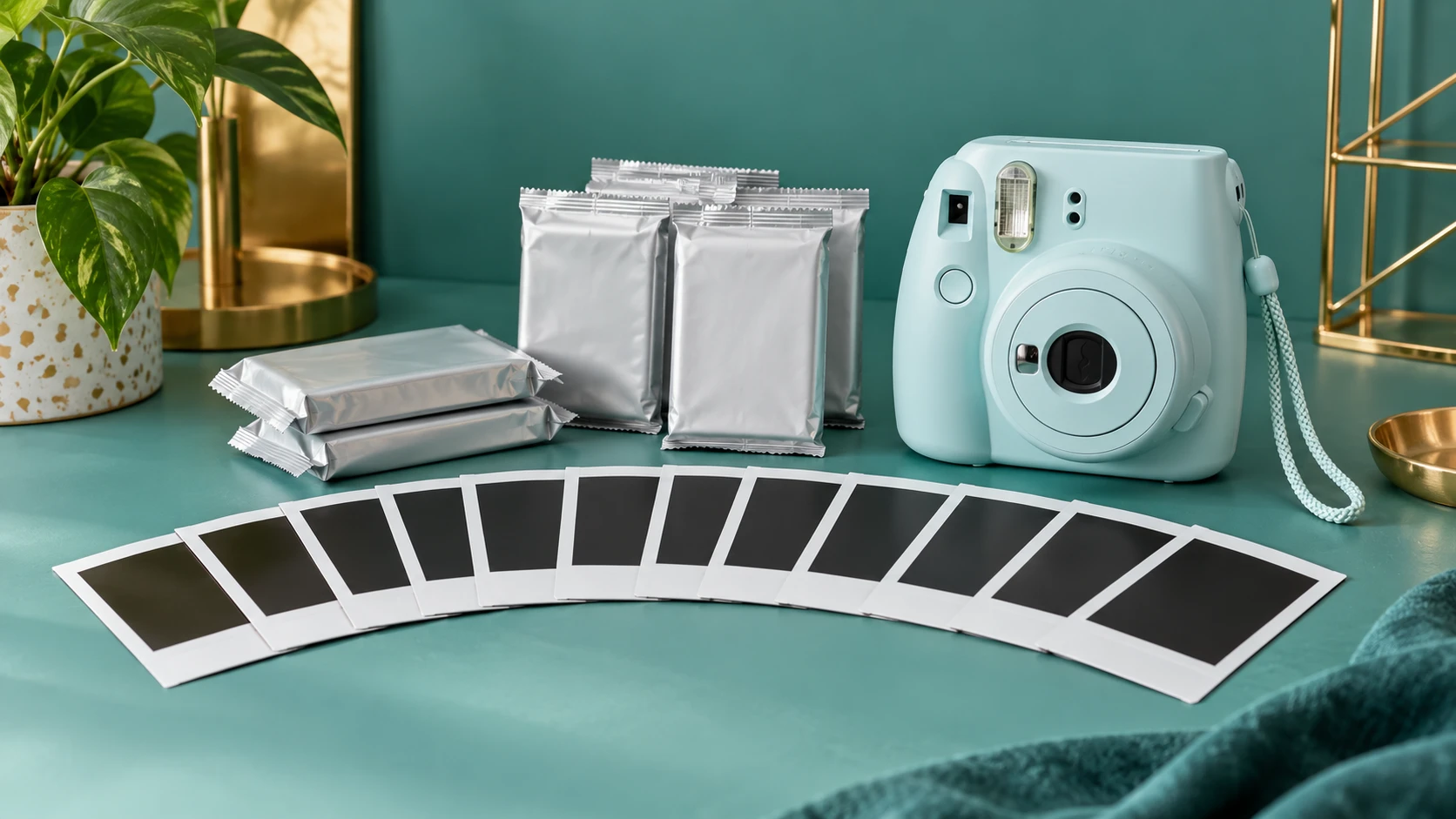
A little film budget helps your child’s next scrapbook adventure begin with enough pictures to tell the story. Compare instax Mini offers by delivered cost per exposure, clear quantities and seller details, rather than the biggest-looking bundle. A standard Mini cartridge contains ten exposures, with an 86 × 54 mm sheet and 62 × 46 mm picture area. Those fixed details give you a useful starting point while actual prices and offers change.
Calculate cost per exposure
Divide the total delivered price by the number of photographs the film can make. Count exposures, not boxes: a twin pack normally gives twenty shots, while a larger offer may combine several ten-shot cartridges. Include shipping, taxes and any membership requirement in the comparison. Your child can help plan which pictures they want, while you work out what the actual pack in front of you will cost to use.
Compare standard and decorative borders
White-border film is a useful comparison baseline. A patterned or character border may be part of the appeal for a particular scrapbook, but check its actual cost and whether it suits the pictures your child plans. The film still needs to be the correct Mini format. A decorated border can make a keepsake feel special; it does not need to be the starting point for every practice photograph.
Check compatibility carefully
The Mini 8 uses Fujifilm Instax Mini film. Instax Square and Instax Wide film are different physical formats and will not fit. Some listings emphasize a newer camera model even though genuine Mini film remains compatible across the Mini line; verify the actual film format on the box.
Prefer reputable sellers
Film can be damaged by heat, age, or poor storage. A slightly lower marketplace price is not a bargain if the seller cannot provide a reasonable return path. Look for sealed manufacturer packaging, clear quantities, and fulfillment details. Be cautious with listings that combine film with low-value accessories while hiding the exposure count.
Understand dates and storage
Check the expiration information when available. Store unopened film in a cool, dry place and follow the packaging instructions. Do not freeze it. If film has been kept cool, allow the sealed pack to reach room temperature before loading so condensation does not form.
Use each pack efficiently
Load film away from bright light, align the yellow marks, and do not open the camera back until the counter reaches zero. Opening the back exposes the remaining sheets. Replace weak batteries before an important event and practice framing with an empty digital camera if children are new to instant photography.
Budget for a project
Plan the finished project before ordering refills. A small scavenger hunt, a birthday portrait collection or a few pictures of a toy’s adventure needs a different count from a whole classroom activity. Allow for some practice attempts and have an adult manage cartridge changes. Agreeing on the first few pictures makes the film a useful part of the present, with a clear next step when your child is ready to take it out.
Budget for a project, not an imaginary perfect pack
Start with the pictures your child hopes to make. A three-frame toy story, a family portrait page and a set of party keepsakes use film differently. Include a reasonable allowance for learning, missed framing or a picture that simply does not work. You do not need to predict the exact number of successful prints to see that ten exposures and ten finished gifts are different promises.
Keep the arithmetic separate from the moment of taking a picture. Agree on a comfortable allowance before starting, then help your child plan within it. A paper storyboard or a practice digital frame can settle the composition without consuming film. That makes the first exposure purposeful without making every shutter press feel like a small financial mistake.
For more than one copy of a portrait, check the camera type. A conventional optical instant camera cannot simply reprint the same digital file because it does not create one in that workflow. You may need another exposure, with a slightly different result. A compatible hybrid camera or printer has a different copying process and its own supply costs. Compare the approach you will use, rather than assuming all instant cameras behave alike.
Check the format and storage before a bulk purchase
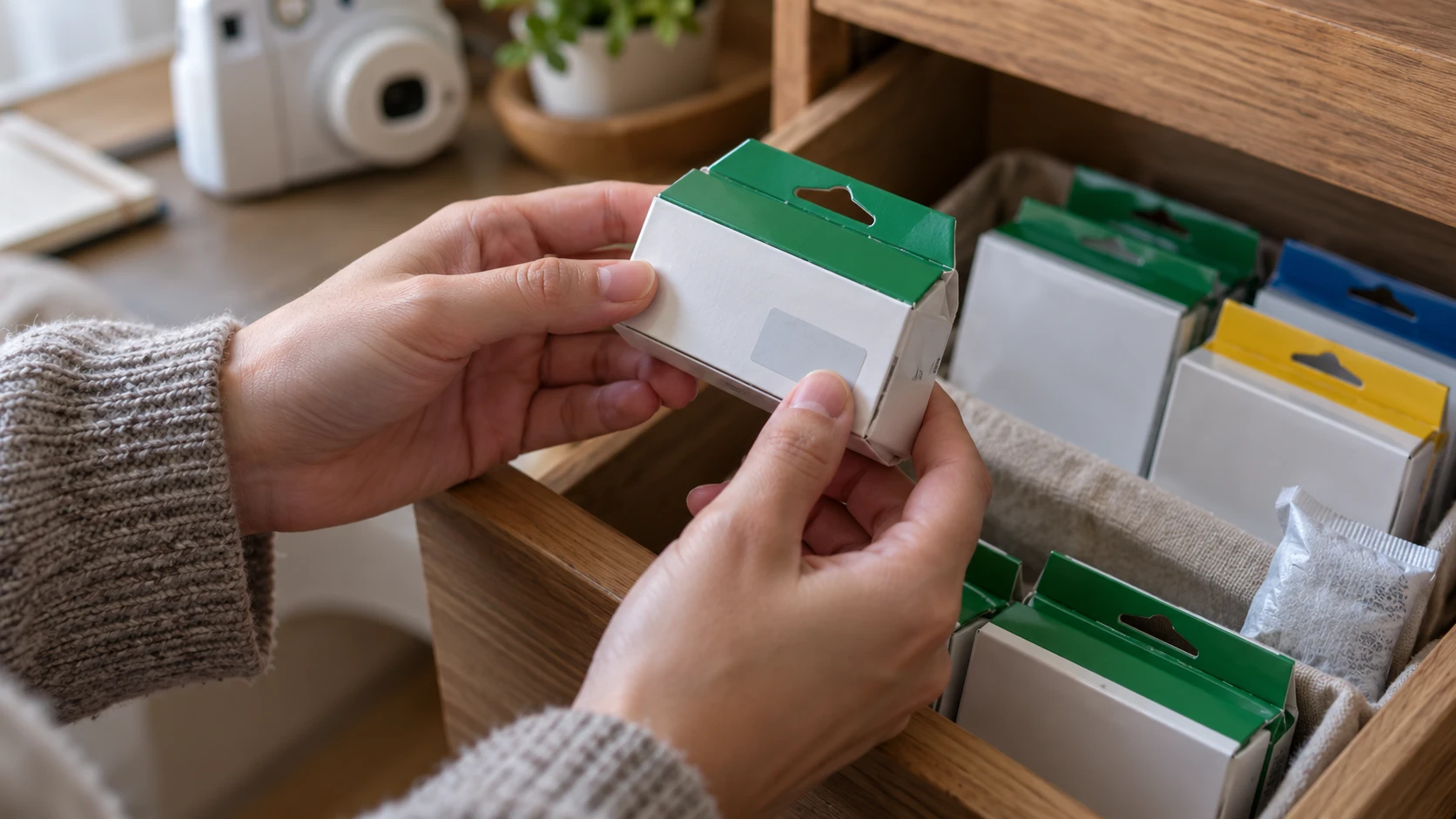
Look for Instax Mini on the compatible supply information, not only the Fujifilm or Instax name. Mini, Square and Wide are different formats. Check the pack count, expiry information and storage guidance in the actual offer. A large quantity is useful only if your family will use and store it appropriately; an appealing price per exposure does not make incompatible or poorly kept film a saving.
You can compare plain and decorative borders around the finished page. A decorative frame may be part of the fun for a gift, while a plain border leaves room for your child’s own caption. Include that preference in the decision instead of treating every pack as identical except for price. Keep the language honest: a live search shows offers to investigate, not a guaranteed price, saving or stock level.
Once the film is ready, let your child spend attention on the subject. A small album of carefully chosen pictures can be a complete project. You can replenish supplies for the next story when there is another idea to make, rather than buying more film to keep an unfinished session going.
Estimate the price of a finished print
For an example only, imagine ten exposures costing $10, with eight pictures chosen for the album. That is $1 per exposure and $1.25 per selected album print. These are invented arithmetic figures, not a current offer. Use the real delivered price and exposure count you see to make the same comparison. A few imperfect frames are normal practice, so do not turn the calculation into a score for your child’s photographs.
We would compare the delivered cost per exposure and seller information, then buy enough matching film for a small, realistic project. Your child can choose which moments deserve a print while you handle supplies and storage. A clear pack quantity and a plan for the first album page are more useful than a bundle full of extras that hide how much film it actually contains.
Matching instant film for the small collection of keepsakes your child wants to make.
Search Amazon for Fujifilm Instax Mini instant film (paid link)